
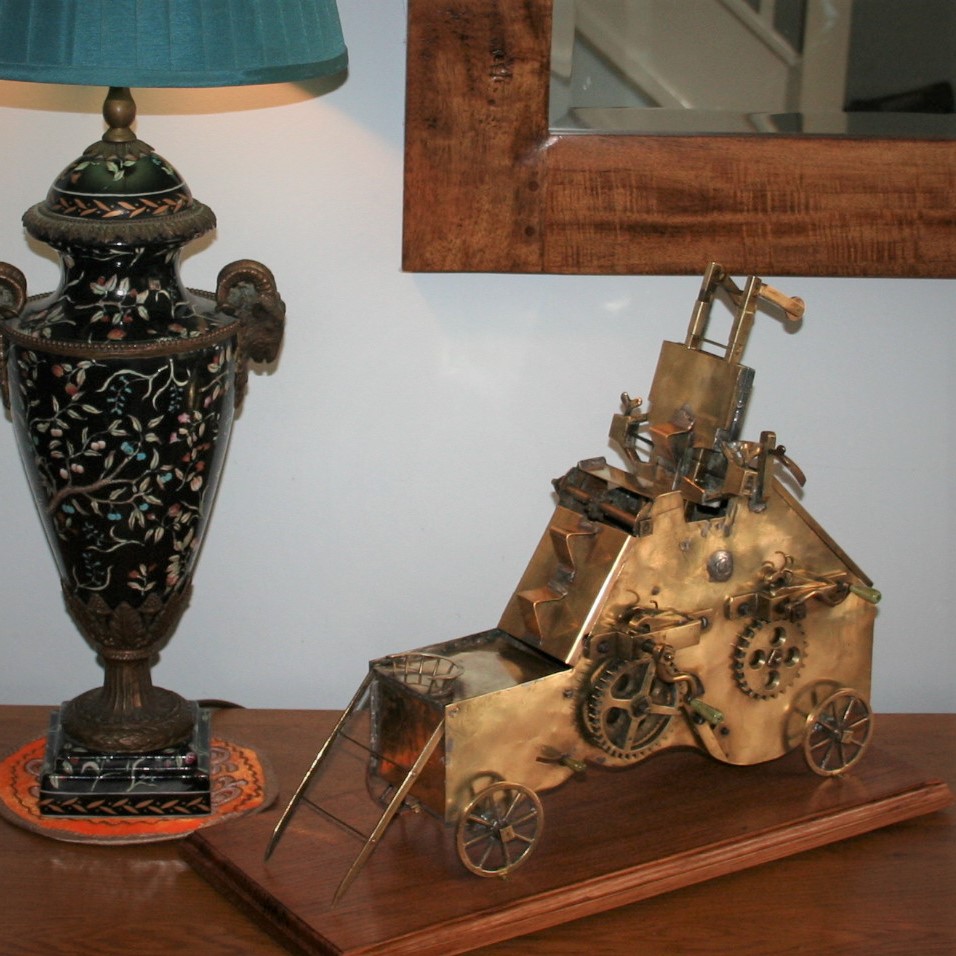
In the world of innovation, a good idea is sadly never enough to ensure success. While we are all taught the stories of the great inventors such as Tesla, Edison or Marconi, and that a single good idea can change the world, we are hardly ever taught about the millions of others who each had their own moments of inspiration but ultimately failed.
The other week a friend showed me an intriguing scratch-built model he owns which he believed to be a 19th Century patent model of a fire ladder. Since old technology in all its forms fascinates me, I was happy to help. After a little bit of digging around we were able to prove his assumption correct both unearthing the US patent application it related to, as well as throwing light onto the probable inspiration behind the inventor’s efforts. It is a fantastic model on its own, but combined with a great story and idea, I thought I’d share it with you here.
Antique Patent models can be a very interesting collecting field, not only as they highlight the myriad of clever and crazy ideas people have come up with over the years, but because they are often marvels of miniature engineering as well. While patenting requirements are different for every country, in the US before 1880 it was necessary to submit (where relevant) a scale model up to around 12” in size. After this date it was not necessary but remained helpful.

(Endless-Chain Cutting Machine Patent model c1890)
The Elm Street Fire and Alfred Rigny…….
Alfred Rigny was born in 1840 in Besancon, Eastern France. At only 18 months old he moved with his family to the East Coast of America and when he was 18 years old settled in New York City where he lived in downtown Brooklyn. According to records Rigny spent his working life as a wholesale ‘Wine and Liqueur seller’ almost certainly importing French and European wines from his country of birth. By all respects he was not what you would call an archetypal inventor, but an event occurred in NY City only two years after he moved there which must surely have inspired him to think about and patent his own form of fire escape.
In February 1860 a now famous fire occurred in NY city at a tenement apartment block on 142 Elm Street (now called Lafayette Street) in Manhattan. This fire tore through the multi-storey building leaving no means of escape for those living inside, and sadly even when the local fire brigade arrived their ladders were not tall enough to reach beyond the 4th floor. In total 10 people died with many others injured all because they had no means of escape. Unsurprisingly the event caused an intense public and media outcry and in response the City Government quickly enacted a new law which made it compulsory for all new buildings to be fitted with an external fire escape.

(a NY City building with external fire escapes)
Over time this important safety building regulation was applied across the whole country and ultimately led to the visual image of the American apartment blocks that we all know today. However in 1860’s NY, while the new law was seen as a positive step forward, it didn’t apply to existing buildings so residents knew that the same danger remained. Due to the publicity and backlash around the Elm Street Fire we can confidently assume that this directly inspired Alfred Rigny to come up with his own fire ladder solution a few years later.
Rigny’s Fire-Escape……….


Beside being a great piece of miniature engineering, Rigny’s Fire Ladder patent model was also quite innovative. His fundamental idea was for a horse drawn metal carriage into which a rolled-up metal ladder could be concealed. Upon arriving at the scene the fireman would be able to quickly and effortlessly turn a cranked handle on the side for the ladder to emerge and slowly rise up to a height of 50 feet in length. It was cleverly constructed in single rung segments for storage in the carriage, but locked itself in place while rising. Another ratchet would allow them to change the angle of the ladder appropriately.
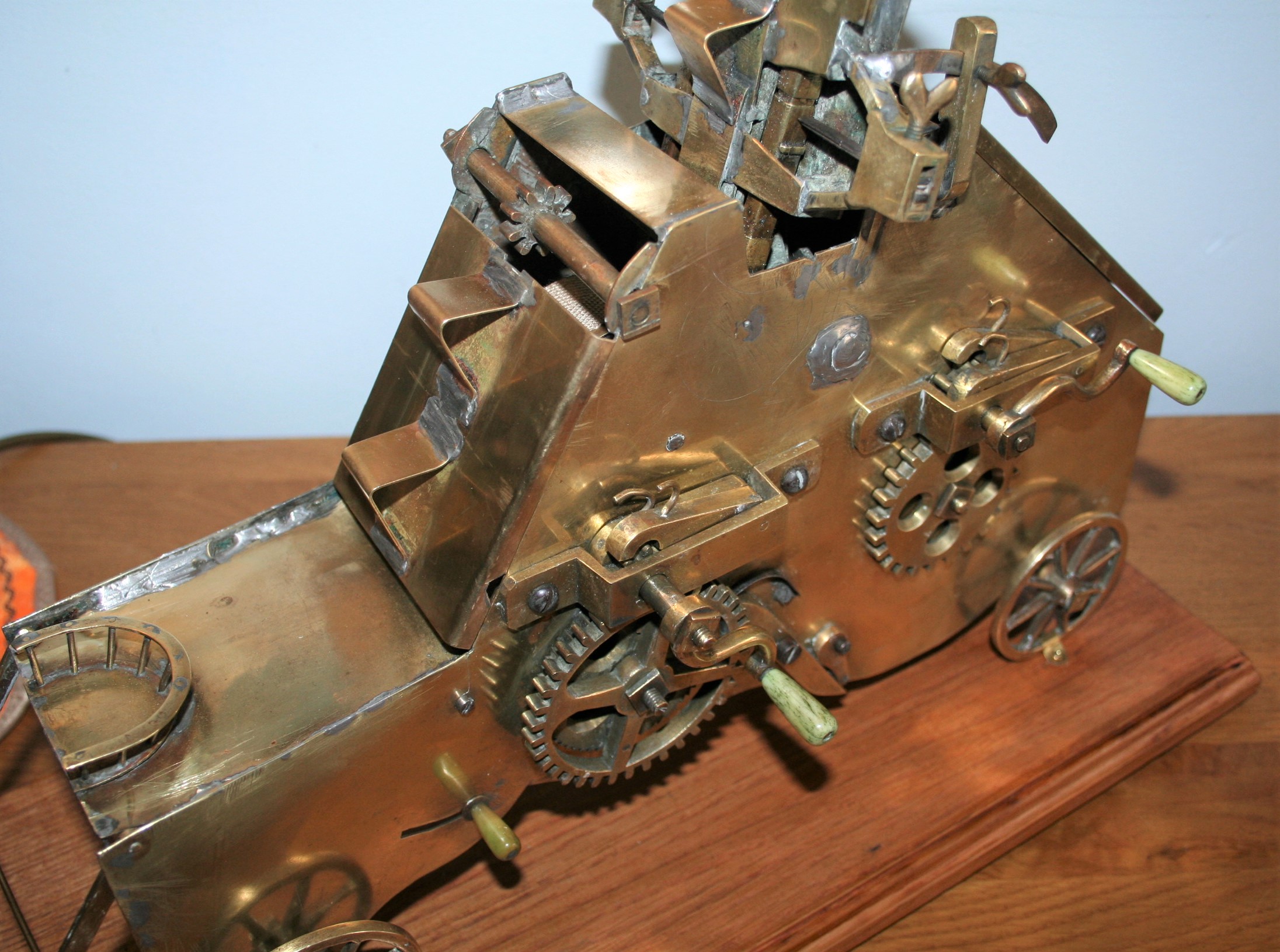
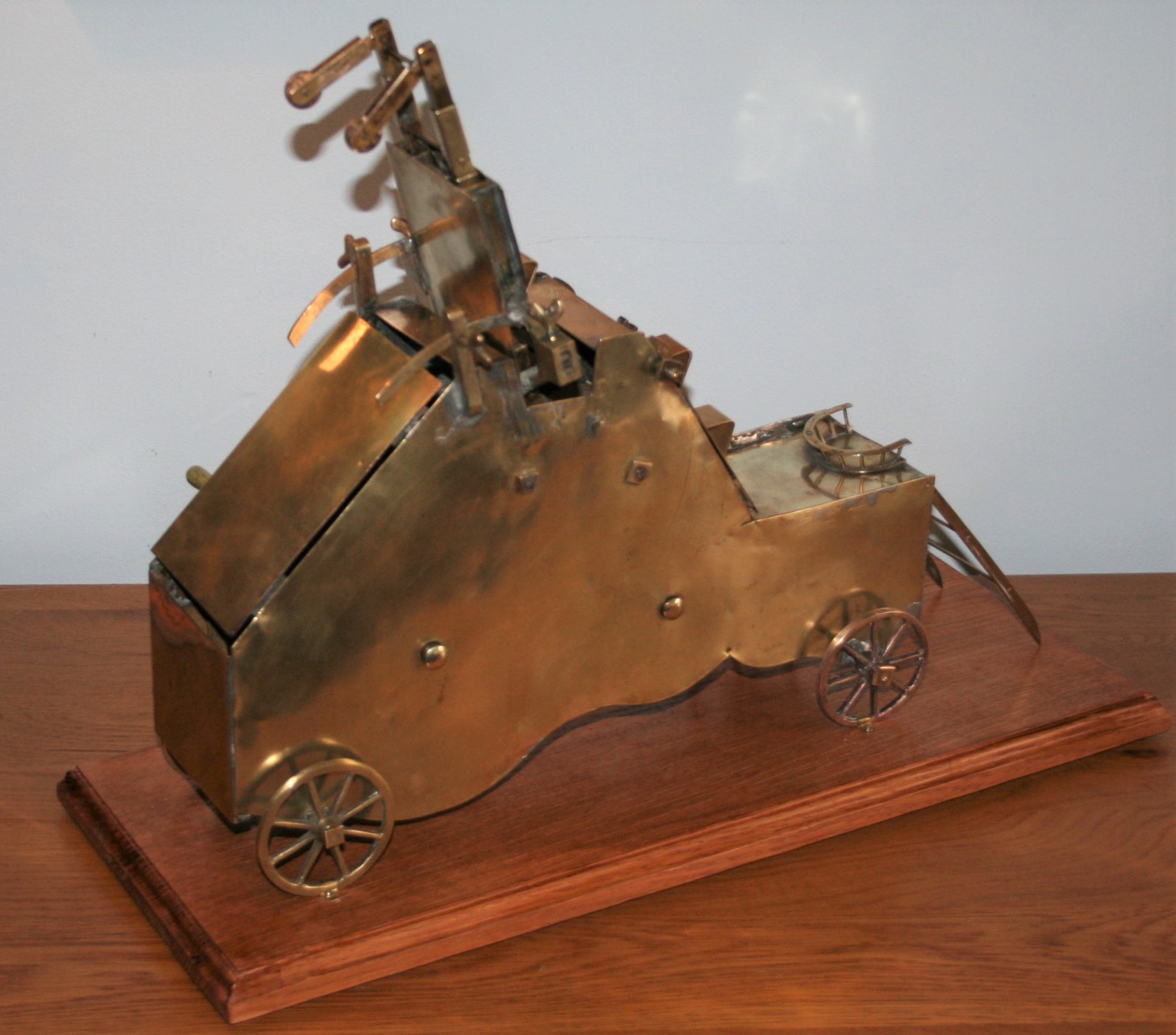
While Alfred Rigny’s idea was obviously unique enough to earn him a patent in 1867, in practice his machine would have been extremely difficult as well as costly to produce (and I can find no evidence that it ever was). Rigny was not an engineer, and while I am neither I can assume that the weight of the outstretched ladder as it raised higher and higher would have made the unwinding progressively more difficult and (more importantly) put so much force onto the base of the ladder where it emerged from the slot that it would quickly have bent or snapped under its own weight. Of course there was also the issue that the machine would have got extremely hot since it could only have been constructed in steel and brass, and if anything the clever rolled construction was probably just too clever leaving a high probability that it would jam at any time…….Light-bulb moments it seems are not the same thing as producing light bulbs!

Rigny of course was not unique in trying to reinvent the trusty fire ladder, and I’ve seen countless 19th Century patent designs which came up with their own variations on the same problem. Some people mounted full staircases on wheels while others attempted scissor-action rising platforms (such as used to load airplanes today). Even so, despite the many innovative attempts made by people ,it would seem that the trusted simple straight rung ladder would continue to be the tool of choice for firefighters around the world until relatively recently. Sometimes perhaps, reliable simplicity really can’t be improved.
Thinking subsequently of solutions to problems he knew much more about, Alfred Rigny went on to patent two different bottling devices in 1883. He died in New York in 1912.
Patent Documents via Espacenet ; NY City Building Photo by V1LL14N ; All other Photos courtesy of Roma Kuzhlev.