

It is fair to say that peripherals rarely get as much adoration as the computers they support, but back in late 1963 when English Electric LEO Computers (EELC) released their Lector they were more than happy to announce it as “…the computer users dream come true”. Lector was an early Optical Mark Recognition (OMR) machine at a time when such things were the future of efficient data processing. And while IMB and other US companies had got there first with the initial OMR patents and machines, EELC’s Lector and Autolector offered a level of versatility that few could rival. Being quick out the gates, Lector would undoubtedly have been one of the first OMR machines produced by a UK company as well. Yet despite the obvious revelry at the time for such a piece of cutting-edge technology, now 55 years down the line very few people have sadly heard of these long-forgotten but ingenious siblings of the mighty LEO computer.

Setting the Scene
Both the typewriter and the Hollerith punch card revolutionised the field of data storage in the early 20th Century, speeding up the output of the humble desk clerk many times over. But while both methods would become the de-facto office tools for many years, there remained the desire and a potential lucrative market for a machine that could completely cut out the middle-man by interpreting human marks itself. This step was viewed as an important jump since typewriters and punch cards both required someone to transfer the data manually onto each machine, yet each manual transfer raised the possibility for mistakes and inefficiencies to creep into the system. Of course, while life still turned at the speed of a well-trained human typist this problem remained a largely manageable one, but when electronic computers emerged after the war which could suddenly process data thousands of times faster than any human could input them, the inefficiency gap became painfully obvious.

During the late 1930s IBM had set about creating the first mark sensing machine (IBM 805) predominantly aimed at scoring tests and worked by sensing the electrical conductivity of graphite marks. While it was a great idea in theory the lack of industry take up suggests it was not yet reliable enough for widespread general use. Instead, up to and during the 1950s both optical mark and image sensing technology continued in the developmental stage at research sites like IBM’s Poughkeepsie Lab. Initially the development incentive came via support from the affluent banks who were keen to find a means to read and process their hand-written checks quicker as well as from statistical and educational institutions looking to minimize human error, but by the mid-1950s an ever growing number of large businesses (who had purchased their new and expensive electronic Computer and were physically feeling the cost of inefficient data entry) showed that an automatic reader would be a very welcome tool.
Around the mid-1950s IBM did look into a system for recognising ‘lakes and bays’ on a page (basically white squares with a black border and white squares with an incomplete border which loosely mimicked the look of individual letters) which was an early form of character recognition. But while it reputedly obtained a good degree of accuracy overall, the reader was still not able to match the extremely high level of efficiency which businesses naturally expected. Efforts therefore turned instead to the far easier problem of creating some very basic form of mark recognition. For this an optical solution was found (which perhaps inspired by the simplicity of binary and bits) measured the difference in light sensed between a light and a dark space. It was this system which would become the standard for many early readers including Lector and Autolector.
If the second half of the 1950s was all about the development and refinement of OMR technology, then by the start of the 1960s a slew of new machines and patents were ready for widescale roll out. The first practical mark sense scanner was created by Everett Lindquist for academic test scoring (patent applied for in 1955 and granted in 1962), and the first widespread commercial OMR machine was the IBM 1230 which was granted a patent in 1960 (but filed in 1957). Thus to any spectator at the time, the flurry of activity around OMR must have made it feel like this really was the future. Even the first use of mark-sensing for an election ballot was conducted in 1962, in Kern City, California, using a system developed by the Norden Division of United Aircraft and the City of Los Angeles.

The Lector A402 & Autolector A403 up close
Sadly while I have been able to find documents about the mechanical and practical side of Lector, I have yet to find anything which gives an overall background history or timeline to the project or the key engineers involved. Suffice to say as a company who were still on the cutting edge of the Computer industry in the late 1950s and early 1960s EELC would have been aware of the upcoming OMR technology and would have been keen to have tapped into this potential market as soon as they could. Furthermore, as a computer company whose roots had started (and at the time remained) in effective stock management tools, OMR must have seemed like a very natural fit. As an aside, while I would love to know for certain how the Lector name was picked, I suspect that just like the name LEO, LECTOR was probably a clever acronym along the lines of: ‘Leo EleCTric Optical Reader’, yet at the same time (by choice or by chance) ‘Lector’ is also the Spanish word for ‘Reader’.

In the end two versions of the Lector were created which internally used the same reading system but were worlds apart externally. The A402 was the basic Lector model and was intended for small to medium-sized business use. It came with no automatic facilities and was modelled around a regular office desk measuring just 86 inches wide x 40 inches deep x 44 inches high. Admittedly it weighed in at a hefty 508 kg so you wouldn’t want to be shuffling it around the office too often, but several Lectors could be easily integrated into most office designs and compared to the giant computers they served, the design was both compact and versatile. It could read between 120,000-200,000 characters per hour which according to their own advertising was 32 times faster than conventional data preparation. It was also proudly advertised as being able to read pencil, pen and biro on a range of paper sizes up to 10”x 8” and could punch onto 5, 7 or 8 hole tape. Since most other machines inc Autolector could only read pencil or computer ink, this was an unusual feat. Once processed, the bins could hold around 500 good forms and 150 rejects.
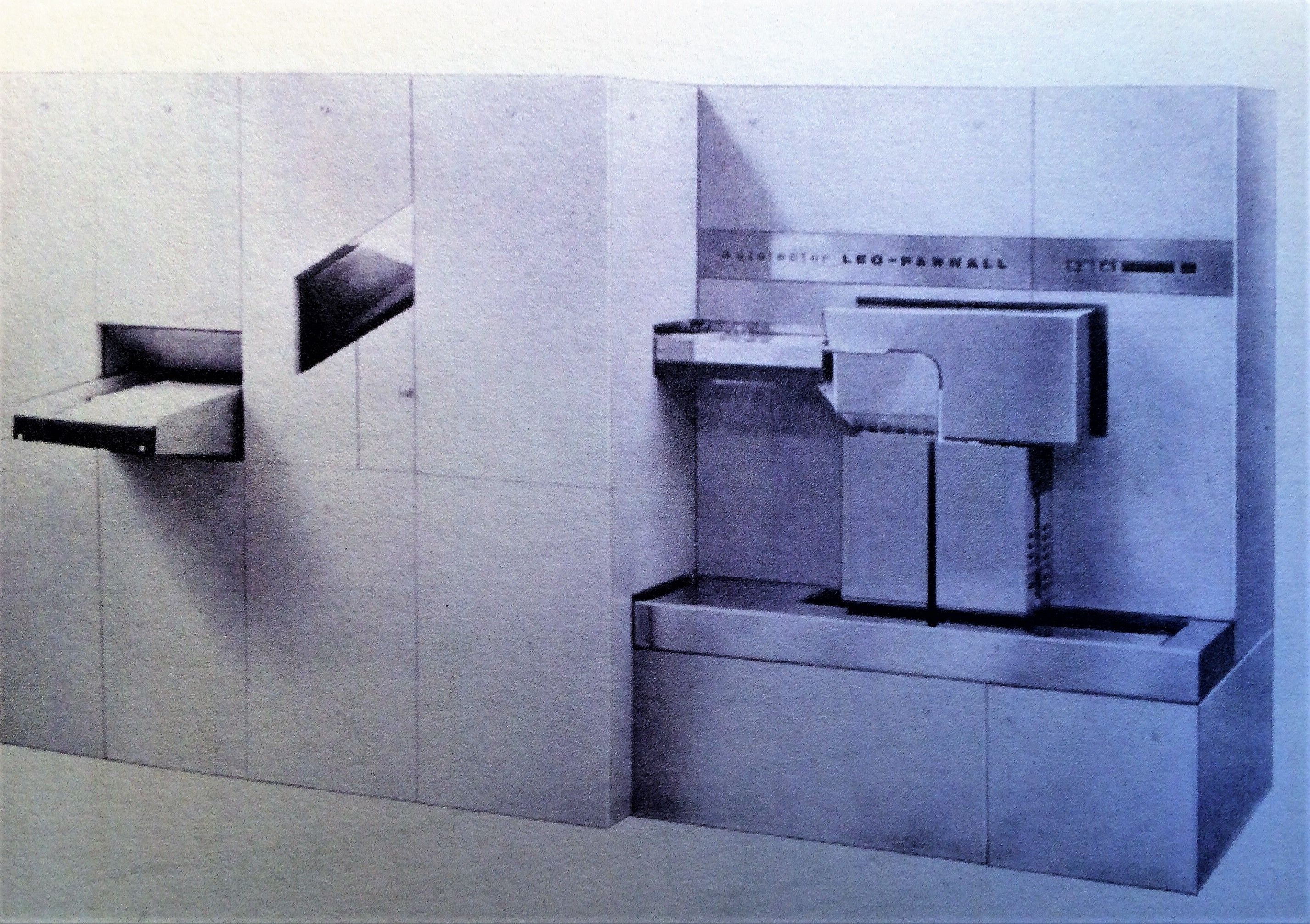
If the basic Lector was intended to help speed things up for a regular business, then the Autolector (A403) in comparison was your new office assistant on steroids. Far larger in both scale and capability, the Autolector came fitted with automatic sorting hoppers and conveyor belts to help maintain optimum efficiency. This was a machine for large-scale industrial use and had been jointly built with Parnell & Sons of Bristol who specialised at the time in high-end shop and aeronautical fitting. Compared to Lector, Autolector could read up to 1,400,000 characters per hour but in either case, both variations still required a separate external paper tape facility (AX400) to actually transfer its data away.
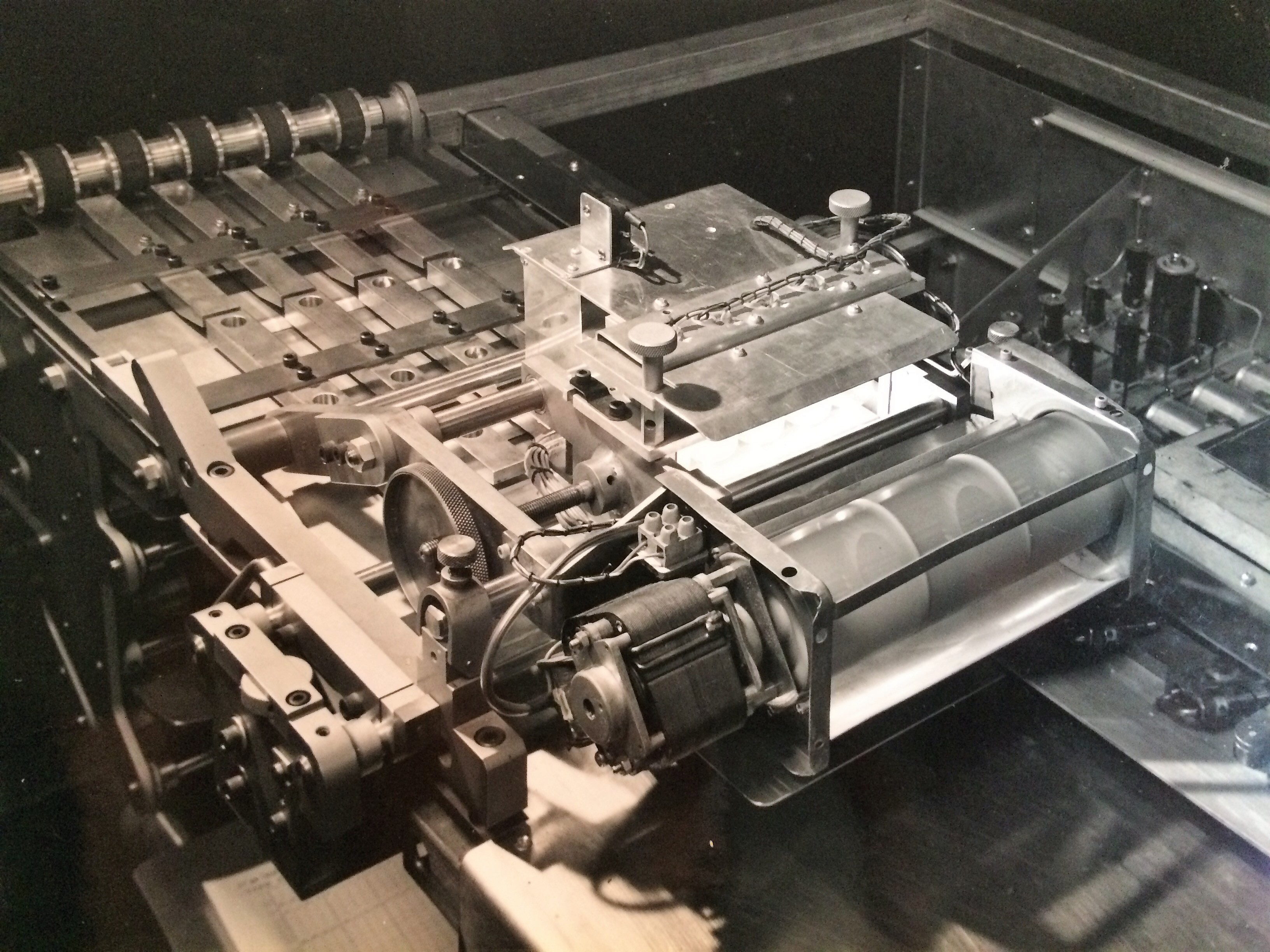
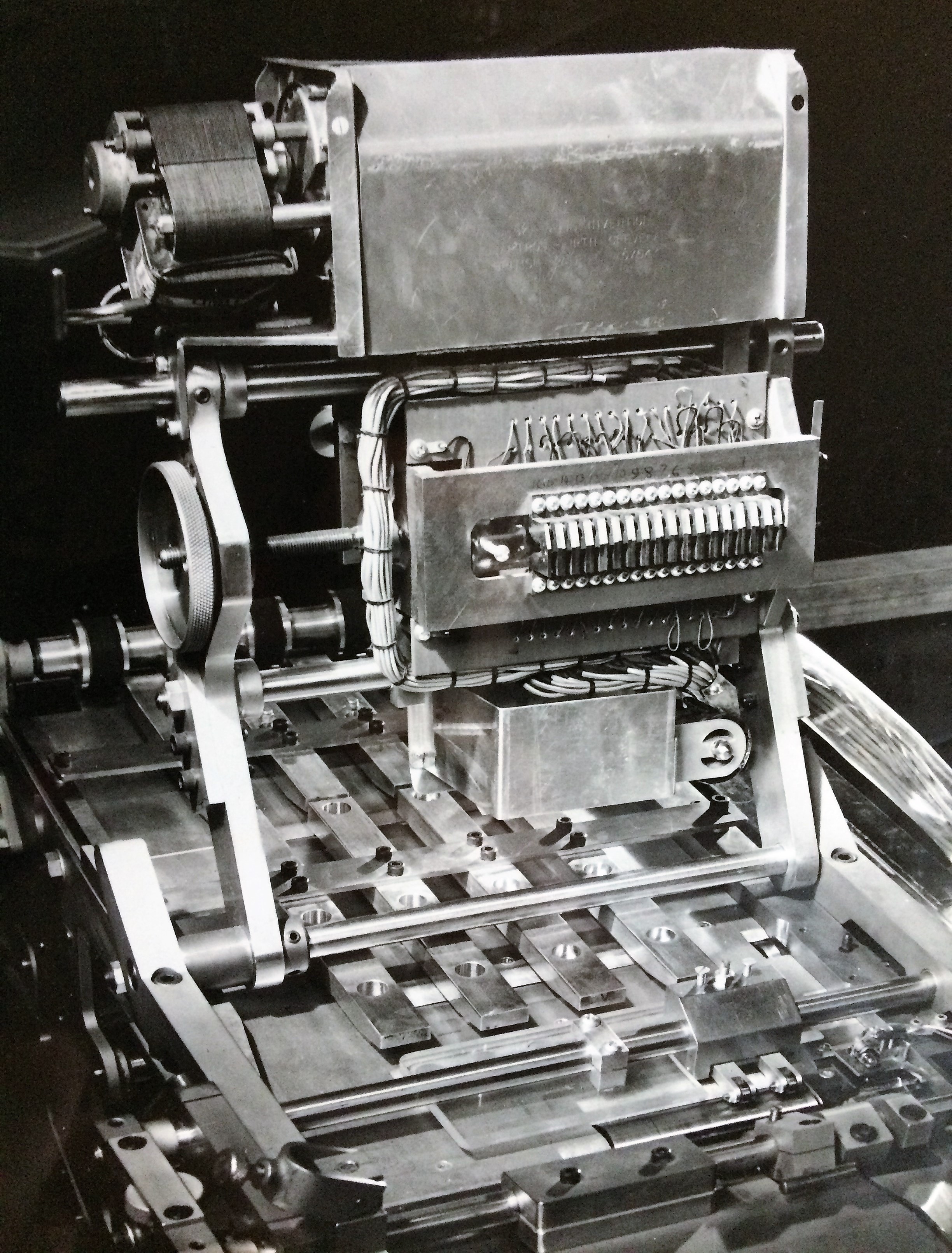
Internally the optical mechanisms in both machines were really the same and it’s speed was achieved by reading 16 column positions simultaneously. To maintain this efficiency the reader only stopped when there was a line to print, but each line had to be printed independently to prevent data overlap. Whilst reading, a 50msec pulse would physically halt the roller to ensure the sensor didn’t erroneously try to read anything in the next column, and while punching a line of data a 1.2sec pulse closed and reset all the flaps ready for the next form.
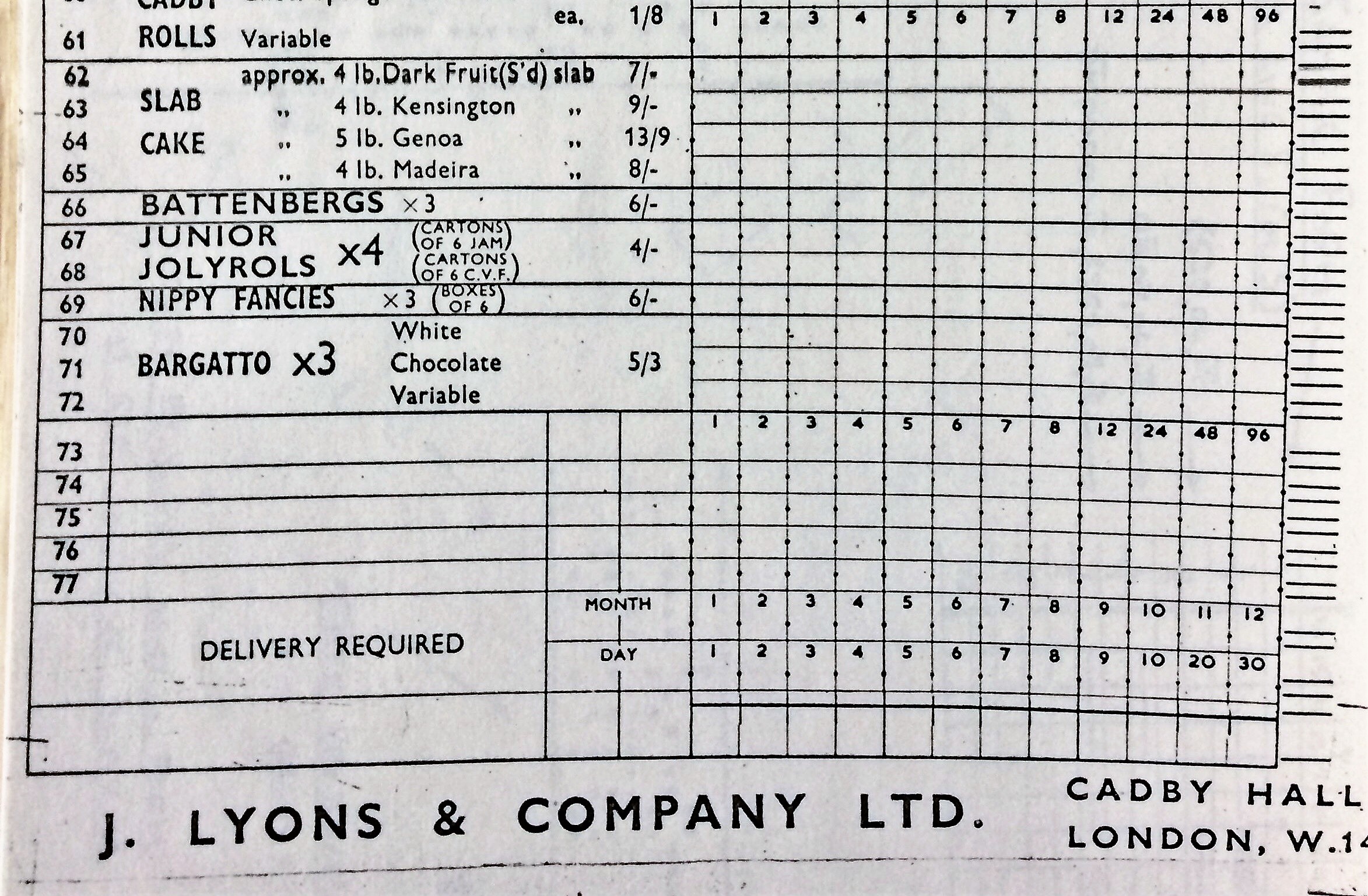
To physically record your data on a form all you needed to do was draw a short line between two points. In the case of mistakes a second line could be drawn directly underneath it which would then void that mark. Since the reader was looking for the difference in light between a white and black spot, the double black line of a fault would technically cancel each other out. To overcome the head-ache of false readings both models were equipped with two level discrimination thereby reading the same marks twice. Any discrepancies between the two sensors would cause an alarm to ring and the machine would auto-punch a ‘doubtful’ mark on the form ultimately sending it to the reject bin. The length and layout of each form would of course vary depending on its use, so the operator told the machine which parameters to expect using Lector’s associated plug board. Combined with an ‘end of form’ location marker at the bottom of each sheet (two lines which were spaced further apart than normal) Lector was therefore able to tally the lines on each form to sift out other potential rejects.
The Lector Legacy?
Working at optimum capacity both Lector and Autolector should have been very efficient and cost-saving tools for any size of business in the 1960s, however it would be fascinating to know how the engineering and marketing played out in reality?! Sadly, I’ve yet to find any data about how many Lectors were manufactured nor if any survive to this day. As a general tool Lector and other OMR machines of the time were revolutionary by opening-up the flood gates to the future of impossibly quick data handling. They heralded the end of an era that had been reliant on laborious human inputting and filled the gap between punch cards and the bar code technology that was to emerge in the early 1970s. As the years passed and technology moved on further, OMR would maintain its dominant position within some specialist fields such as mark-checking and electioneering. In time true character recognition software would emerge also. But in the field of stock management OMR would be supplanted by small handheld Remote Terminal Units (RTU) as used by every industry around the world now.

Today Lector and Autolector are both viewed as forgotten technological dinosaurs yet perhaps they do deserve a more favourable epitaph. While neither were the first of their kind to appear, the sheer brutal efficiency of Autolector is commendable, as was both of their ability to be used alongside any mainframe computer (not just those of their parent company like so many others at the time). For Lector in particular, there was also the early inklings of things to come. Granted this was not a portable machine in any modern sense of the word, but as an autonomous and small-ish item it gave the computer the chance to stretch far out beyond head-office into the edges of the business. Lector’s presence therefore handed new responsibility to the factory floor worker yet usurped power from the pool of office staff who had previously and zealously guarded the path to the mighty computer. And we have never looked back since.
image attributions: Lector Advert by BSC.org ; typing competition by Bernard Goldbach; IBM Punchcard machine by Marcin Wichary ; Barcode reader by Artisphere