
(As published in West Country Life- Feb 2018)
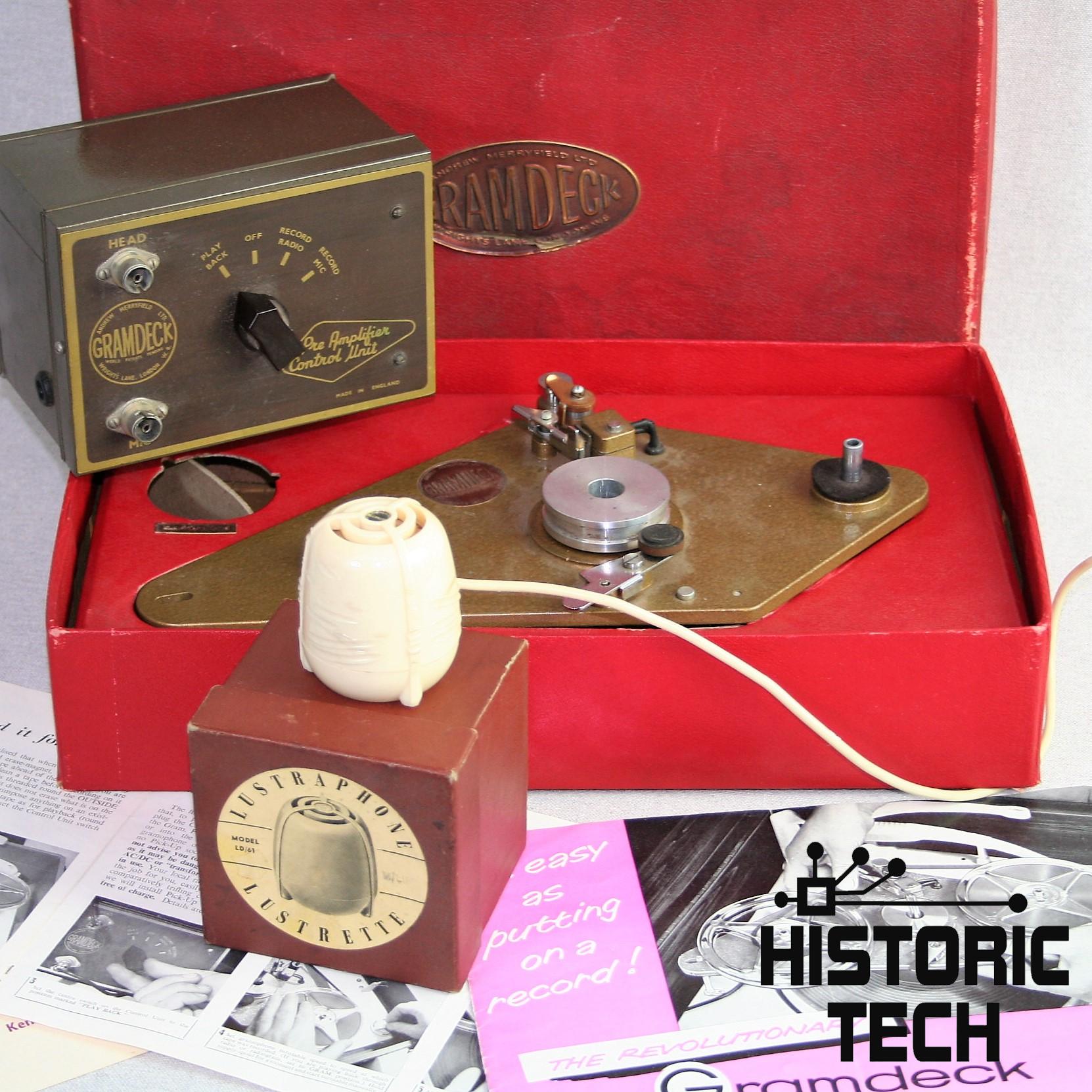
So it is the late 1950s and only a few years back you spent a small fortune on the latest radiogram that sits proudly in your living room. It has all the features a modern family could want including a multi-speed record player, world radio and of course a space for your prized records, but then along came reel to reel tapes. Although you want to be part of this exciting new format, your budget simply won’t stretch to replacing that player AGAIN…… well have no fear! In 1959 thanks to the helpful guys at Andrew Merryfield Ltd the British public were able to buy an inexpensive attachment that converted any existing record player to play reel to reel. It was called the ‘Gramdeck’ and not only could it play 5 inch reels, but it could record onto them also. All of a sudden Granny’s rendition of ‘keep the home fires burning’ or little Jack practicing his violin, could be easily and discreetly recorded for posterity. And it could be yours for only £13. 12s (or £16. 10s on easy terms).
One of the fun things about digging around in vintage technology is coming across all the weird and wonderful accessories that went along with each new invention. As the next big thing rolls in, the prices are inevitably high which creates a price vacuum for enterprising companies to try to fill. The Gramdeck could be considered one of these things. Even more it probably represents many people’s first experience of a tape recorder as well as a class of low cost quick-fix gadgets that even Heath Robinson would be proud of.
The Gramdeck was invented by a Mr Tutchings for the Royal Radar Establishment (a firm who produced electronic components for UK defence contracts used in Warships and Planes). Intended originally for their own use, people obviously thought it had a fair chance of commercial success and approached Merryfield to distribute it. Used to producing parts for battleships I don’t think Royal Radar were probably on the cutting edge of contemporary fashion, and from first glance of the product everything shouts pre-war. From the muted earthy colours to the stamped brass plaque on the top of the box, if you didn’t know any better you’d guess you were looking at a kid’s toy from the 1920s or 30s.
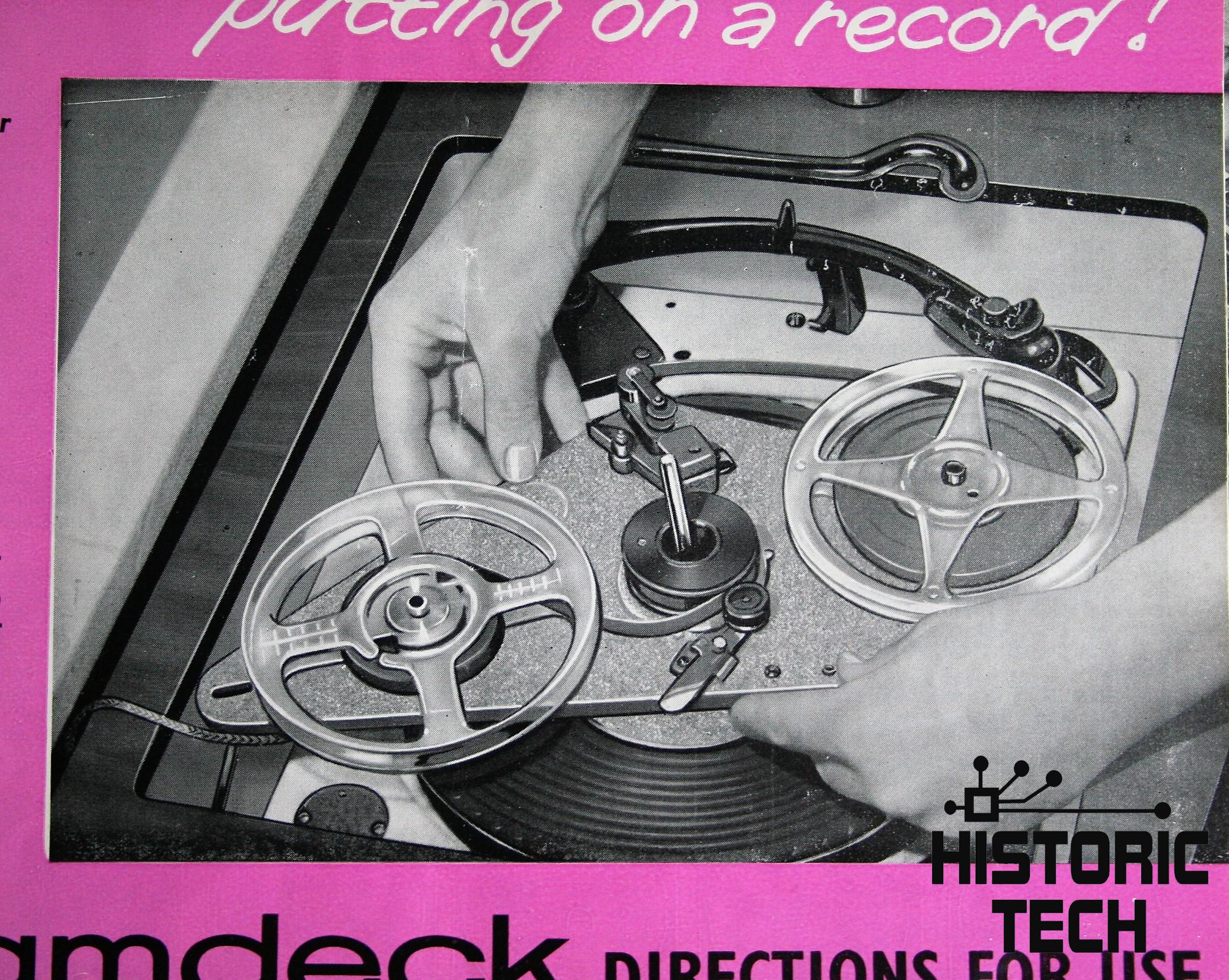
Despite its solid metal construction the machine is actually surprisingly simple. Even in their own advertising it gives an endorsement quote from the Tape Recorder magazine that states “Ingenious-simple….why on earth did no one think of it before!”.
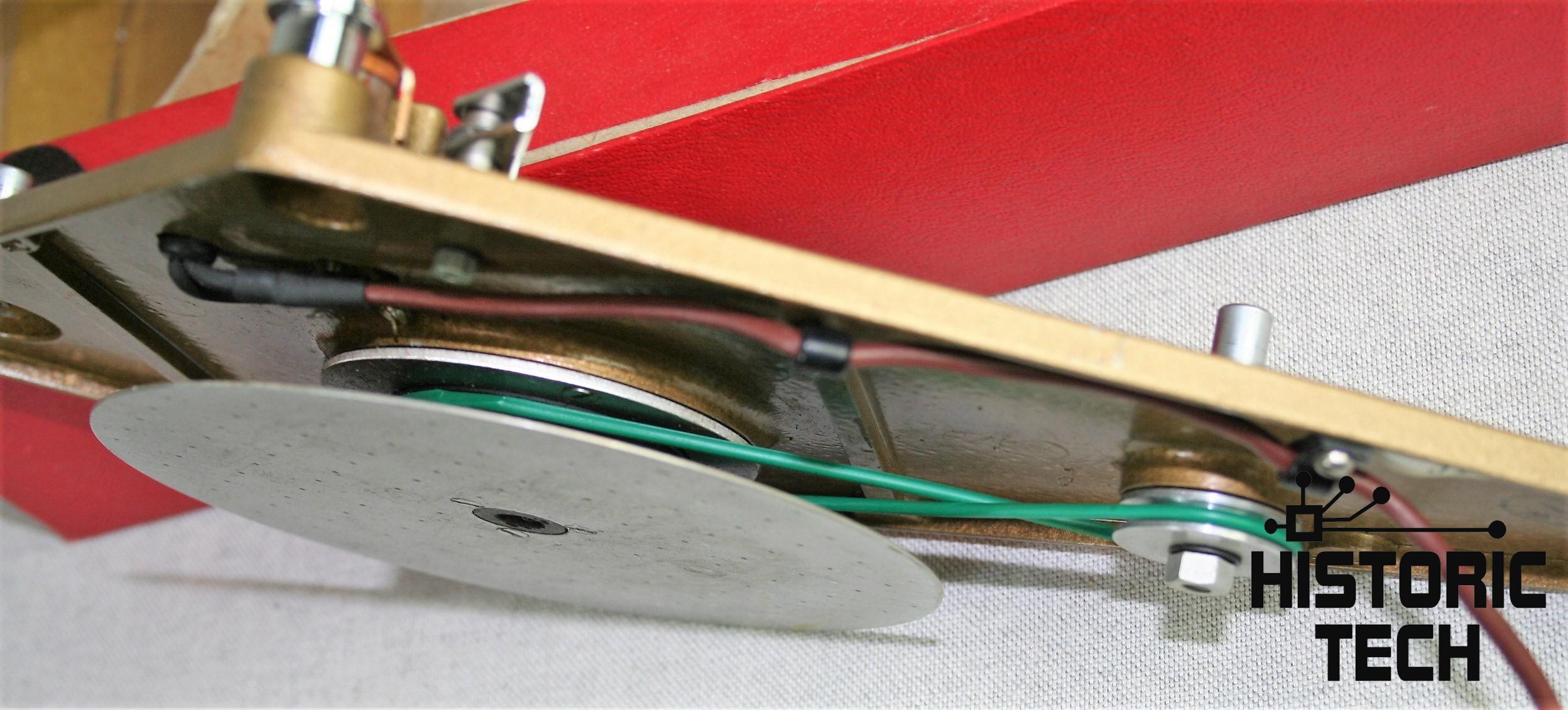
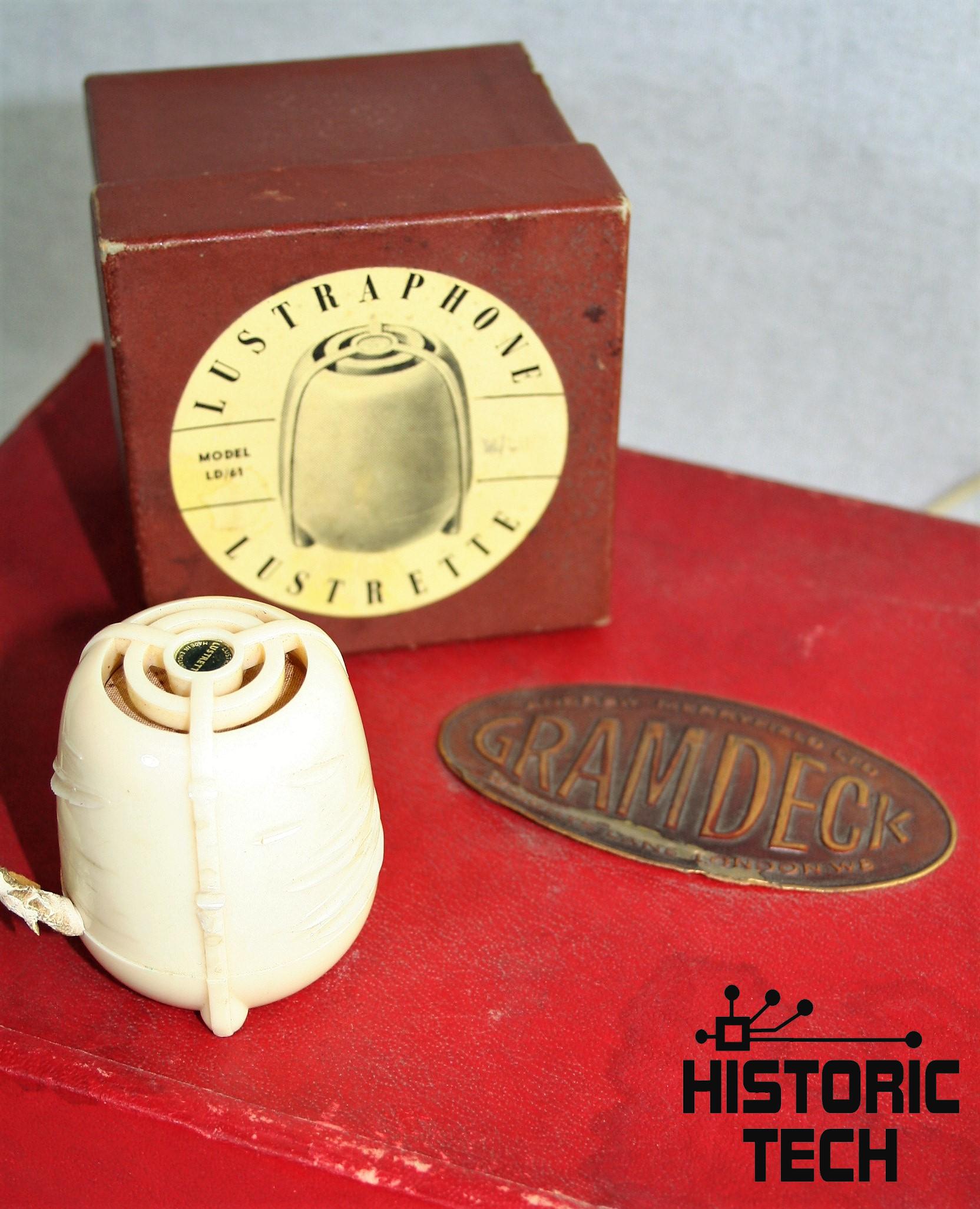
To use the reel to reel the metal plate slips over the turntable and spindle of your record player. As your deck turns it rotates a rubber belt connected to the take-up spool of the Gramdeck. Along with the plate, the set also included a plastic table microphone and a tiny amplifier that ran off a 12v battery and appears to have been fashioned from a biscuit tin. On the plus side the mini amp was supposed to be able to run for an amazing 600 hours just off that one battery. The mechanism really was as paired back as possible, and although you could play and record on it, your Gramdeck would neither rewind nor fast forward meaning you had only one shot while recording.
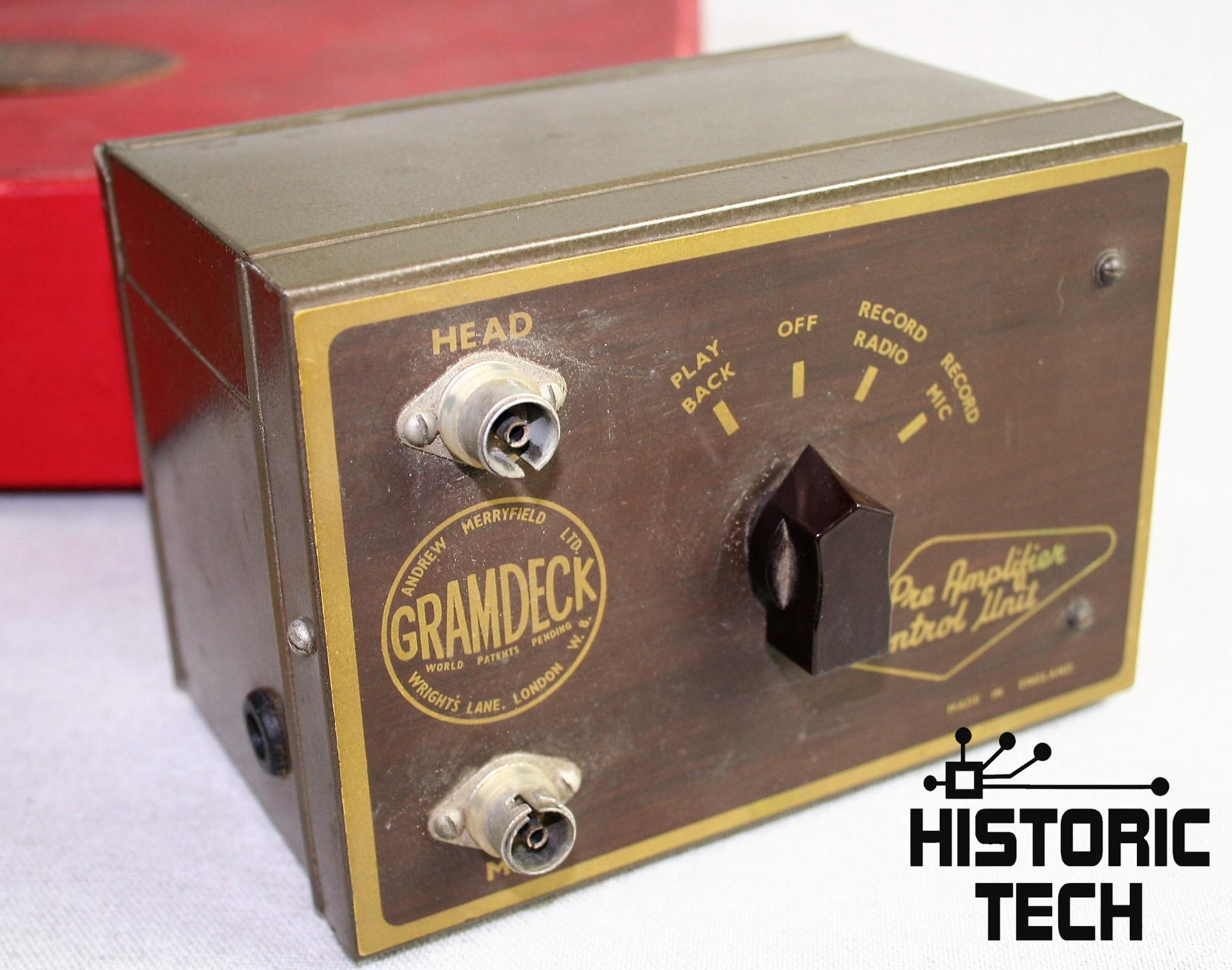
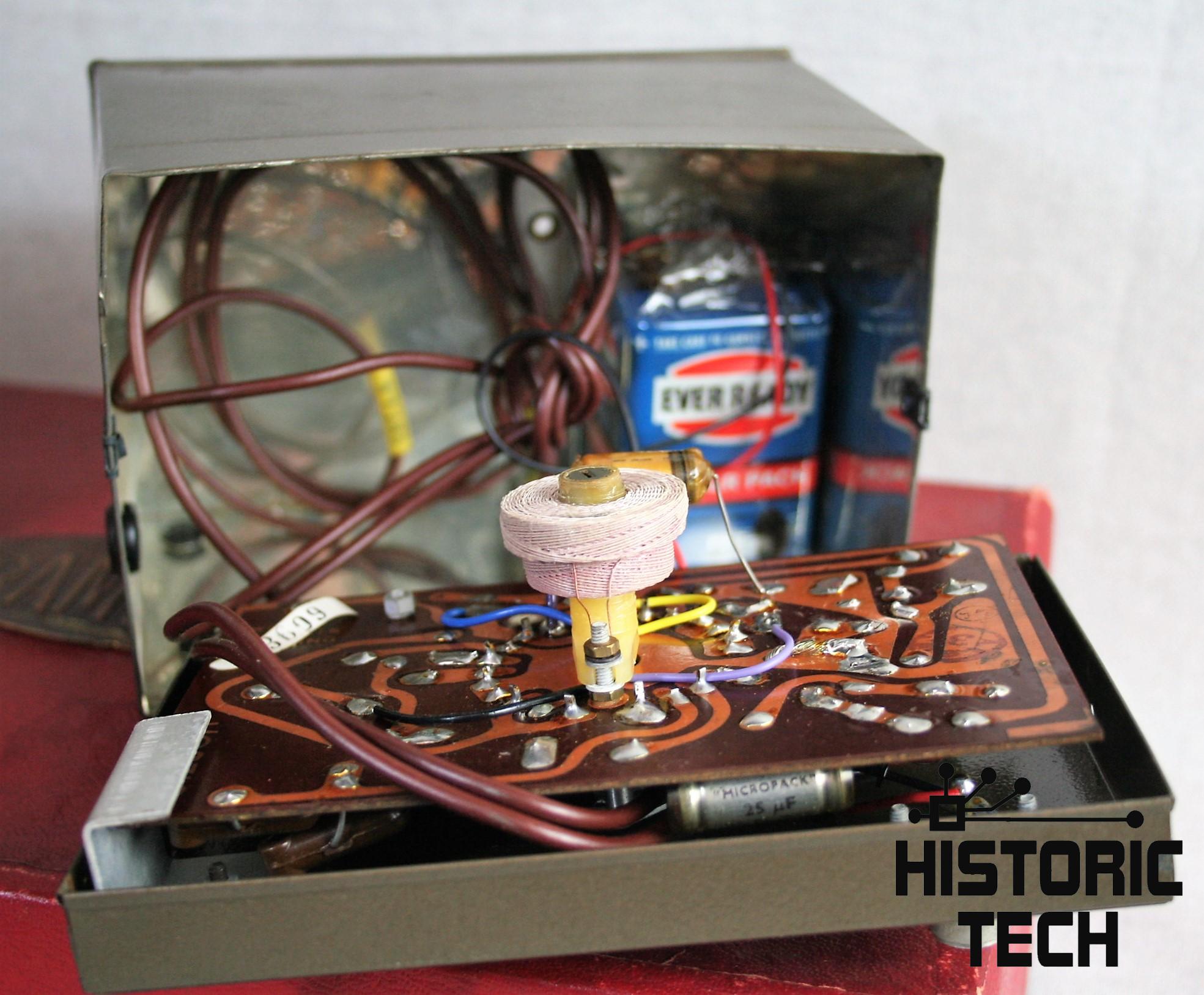
When you consider that its price of £13 in 1959 was roughly the equivalent of £210 today, it makes you wonder how they managed to sell any? If you look online there are actually plenty of these units still around, so we can assume it was quite popular back in the day (although since many are still boxed it was obviously one of those things you consign to the back of the cupboard pretty quickly). Indeed if you look on Youtube there is a video someone has uploaded that shows one of these contraptions in use, and I must admit it also sounds much better than expected.
Of course the Gramdeck was not to become the de facto tape recorder it’s literature hoped it would be. By the early 1960s the price for good quality reel to reel players were dropping considerably, but probably more importantly in 1963 Phillips would release its new Compact Cassette tape range which would revolutionise tapes and home recording.
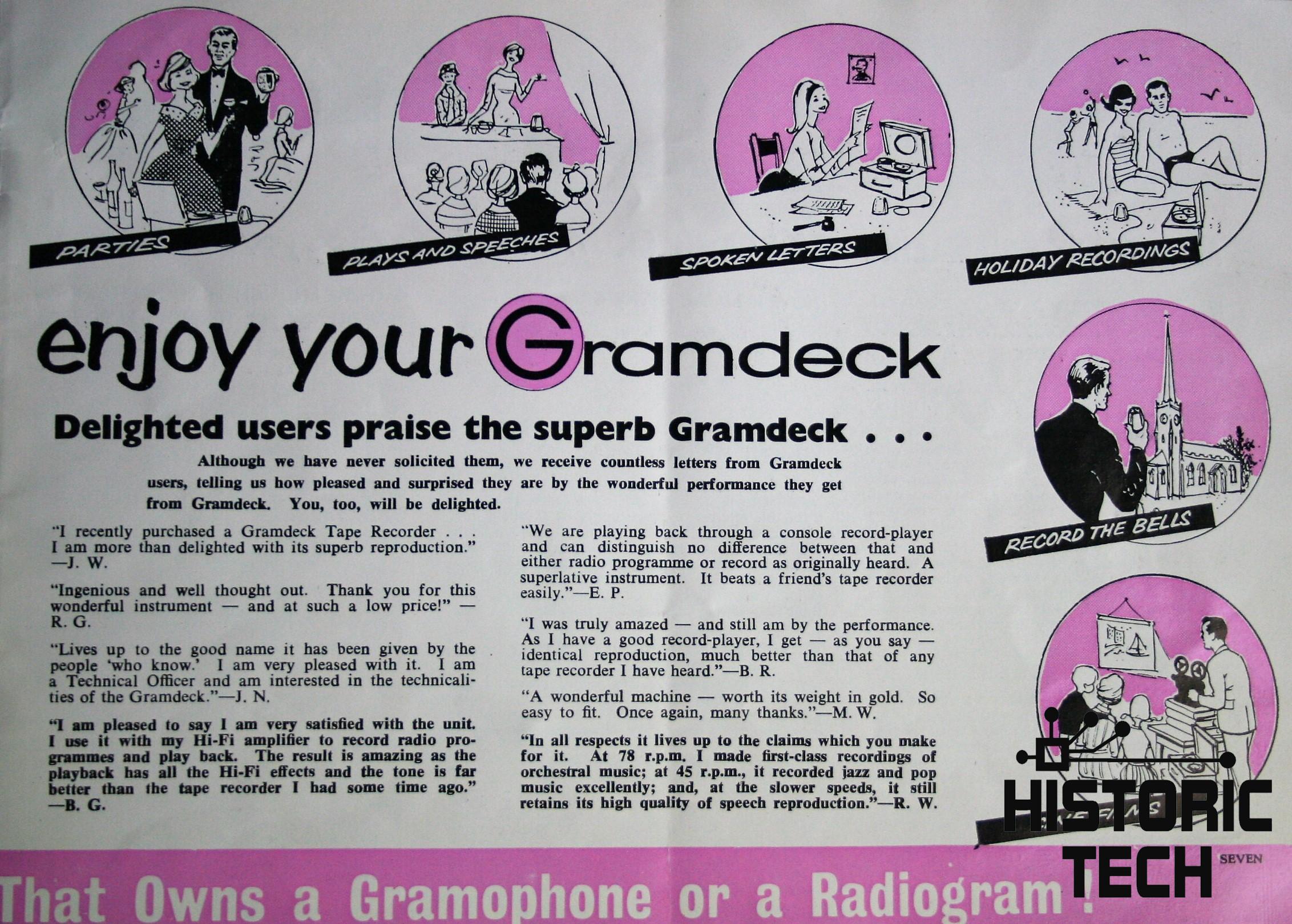
So apart from seeing it as a novelty, what can the Gramdeck really teach us? For starters its popularity showed that people at the time were keen to embrace tape and this gadget opened that opportunity up to the masses. What is also interesting in the literature is how much attention was paid to its role as a ‘portable tape recorder’ meaning it must have actually been a real novelty at the time. Since this item could be attached to any machine including portable gramophones (and ran off its own battery), it really was an early form of portable tape player and perhaps therefore deserves a better eulogy in the history of recorded sound. Finally, while most gadgets try to hide their simple mechanisms under colourful and stylish plastic cases, the Gramdeck was different. This was solid British engineering, and it was proud and happy to wear its simplicity as a badge of honour. For that I give it my respect, however I won’t be ditching my digital Dictaphone or ipod any time soon…………
I owned a Gramdeck, when I was around 15 years old. The turntable motor wasn’t powerful enough to drive it reliably, causing horrendous wow and flutter. The amplifier output was awful. It was really a classic piece of British engineering: trying to do the job on a low-budget, improvised basis, and failing. Much like a British car of the period, the Reliant Robin, which tried to prove that a three-wheel vehicle would be acceptable, but tended to fall over when it went around corners.
I gave up on the Gramdeck, and my father bought me a Philips four-track tape recorder instead.
I can certainly endorse the comment made by Charles Platt. I fell for the advertising and used my own hard-earned cash to buy a later model which combined a low quality record player with a separate Gramdeck to convert it into a tape recorder. I bought it with money I earned in the year before I went up to university (1961). The record player was OK ish. I got some use out of it. However the taper record deck was a disaster. For whatever reason, the wow and flutter on recordings was so horrendous could never use it. There must have been no quality control in that company otherwise it would never have been put on the market.
We had one in the 60’s and strangely it worked very well! I think maybe the record deck we used was more robust and flutter was not a problem, it produced pretty good recordings for something that looks such a crazy idea. When I bought my first Phillips cassette player rewind and fast forward were a distinct advantage! I can’t remember how we rewound on the Gramdeck, must have turned the tape over and changed the speed to 78. I love these old bits of tech.
Well I purchased a used Gramdeck tape recorder in the early 1960’s,and it worked fine , I still have it, and I remember an advert for it ,read, Can be used out doors to record bird’s and other outdoor sounds my using your gramophone out in the country side ,That is all was available at that time to record outdoors , mine worked fine and the record player had to have a strong motor to drive the tape deck to avoid flutter ,